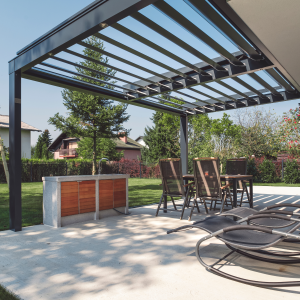
The main differences between a pergola and a gazebo lie in their design, structure, functionality, and purpose. Here’s a breakdown of the key distinctions:
1. Structure and Roof
- Pergola: A pergola typically has an open-roof design, consisting of vertical posts or pillars that support crossbeams or lattices. The roof is not solid, allowing sunlight and air to pass through. Some pergolas can be covered with climbing plants or vines to provide partial shade.
- Gazebo: A gazebo has a fully enclosed roof that provides complete shade and protection from the elements. It usually has a solid or domed roof supported by columns, offering more shelter from rain, sun, and wind.
2. Shape and Size
- Pergola: Pergolas are generally rectangular or square and can vary in size depending on the available space. They are often placed over patios, walkways, or gardens to create a shaded area.
- Gazebo: Gazebos are usually octagonal, hexagonal, or circular, though rectangular options exist. They are often freestanding structures in gardens, parks, or yards and are typically larger than pergolas.
3. Functionality
- Pergola: Pergolas are primarily designed to provide partial shade or create a defined outdoor space, often used for lounging, dining, or as an aesthetic feature in a garden. Since the roof is open, it doesn’t provide full protection from rain or intense sunlight.
- Gazebo: Gazebos offer complete shade and shelter, making them suitable for use in various weather conditions. They can be used for events, outdoor dining, or simply as a place to relax, providing better protection from sun and rain.